Local Brand AI Answers: How Local Businesses Get Into AI Local Recommendations
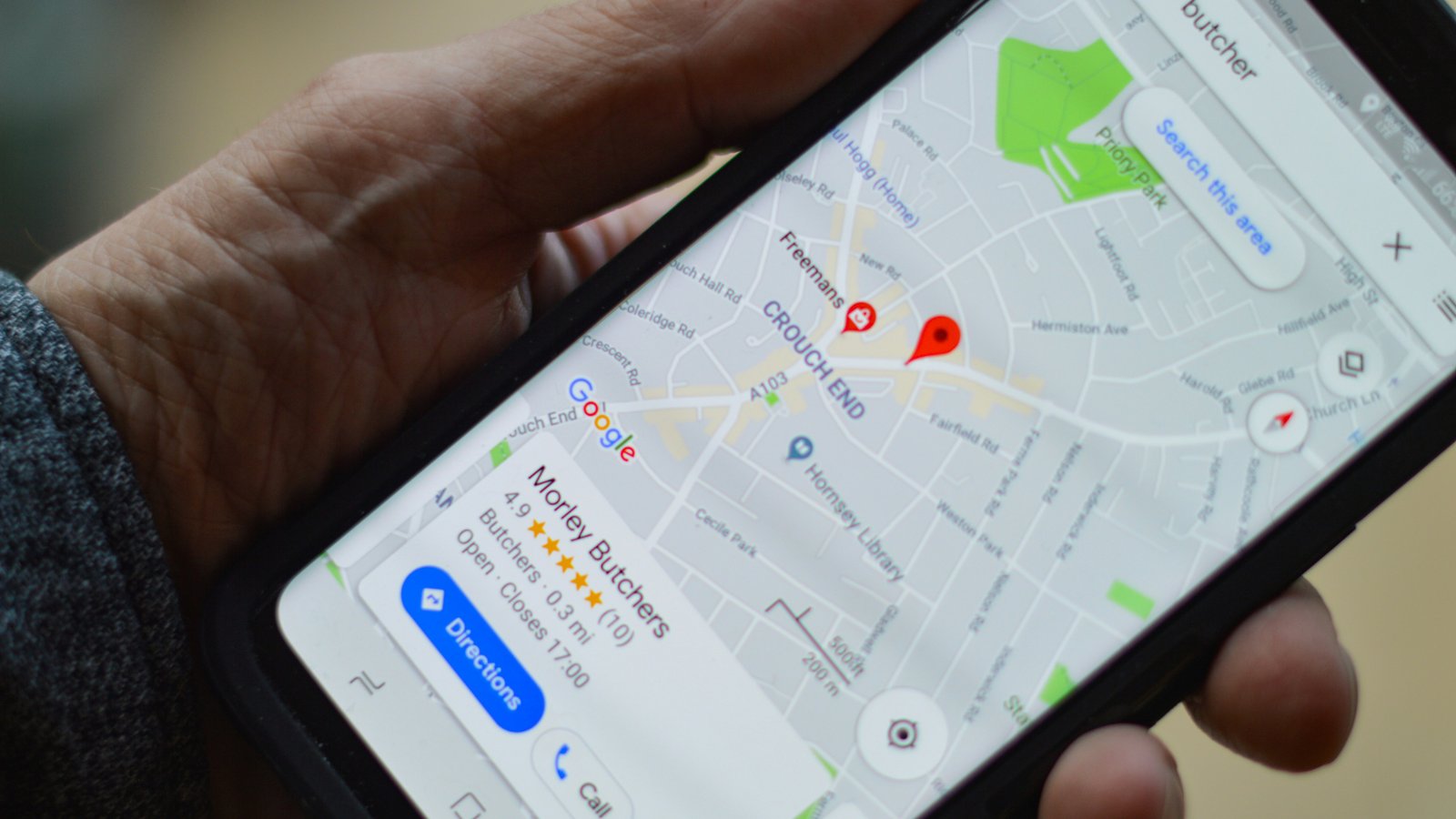
Summary: AI answer engines are turning "local recommendations" from a map of ten blue links into a single sourced natural-language answer. For a local business, being recommended is no longer about buying an ad slot but about making its entity facts—name, address, phone, hours, real reviews—machine-verifiable and trusted as a source. This article splits the work into three gates—crawlable, verifiable, attributable—and gives practical steps for business profiles, structured data, and a fixed question-set monitoring method.
Key Takeaways
- The essence of AI local recommendation is the engine picking, within a "city + category" conversational query, the store whose facts are most complete and most verifiable to cite as the basis.
- NAP (name, address, phone) consistency is still the foundation, but AI weights "whether there are directly citable structured facts" more than "what position the page ranks."
- Google Business Profile, map POI, and third-party reviews are the three source types AI local answers most often draw from; their wording must stay consistent.
- Single-point optimization fails: the website, business profile, review platforms, and social home must describe the same entity with the same names and facts.
- Local visibility must be measured with a fixed question set, not "I asked once and it seemed to mention us"; fix 20–30 phrasings covering the same city and category.
- Attribution correctness tells you more than mere mention: name, address, and conclusion must all be extracted right to count.
I. What Is AI Local Recommendation: From "Ten Links" to "One Answer"
In the past, a user looking for local services got a map with a list of businesses and clicked to compare. Today when a user asks "what are good cafes in this city for kids on weekends," the answer engine synthesizes a passage with store names and reasons, often with address and hours. xAI, Google, and several conversational products are reshaping local retrieval from "a list" into "an answer."
For merchants this changes the target from "what rank" to a harsher question: in this one local answer, can your store become the cited one? One rank lower only means less traffic, while not being trusted as a source means you have no place in the answer at all. Note that no public, stable document discloses each engine's internal local ranking formula, so the safer move is to treat the preconditions as a checklist: can it be crawled, verified, attributed.
II. The Citation Chain: How AI Decides Which Local Store to Recommend
Splitting "being recommended in a local answer" into three stages turns optimization from guesswork into a checklist you tick item by item.
| Gate | Problem the engine solves | Typical blocker | Corresponding technical action |
|---|---|---|---|
| Crawlable | Can I fetch this store's info | robots block, JS rendering, unstructured profile | Open crawling, add structured data, sync business profile |
| Verifiable | Does this claim hold up | Conflicting address, dead phone, expired hours | Unify NAP, state data definitions, keep facts fresh |
| Attributable | Who should this be credited to | Confused same-name stores, unclear entity, unmatched reviews | Unified entity name, link official page, dedupe POI |
Use the table top-down: if gate one fails, the other two are irrelevant no matter how polished. In practice a large share of "great reviews but never mentioned by AI" stores die at gate one—an address in the business profile that disagrees with the website, or a robots block, keeps the engine from stably fetching the facts.
III. Practical Steps to Make a Local Brand Citable by AI
- Entity health check first. List name, address, phone, hours, and website link as five items and check the business profile, website footer, map POI, and review platforms for full consistency. Any contradiction lowers the engine's trust.
- Lead with the answer. Open the store page with a standalone 40–60 character passage that directly answers "what is this store, where, why worth visiting"—no setup. The engine looks first at whether this passage is already answering the question.
- Mark the local entity with structured data. Use LocalBusiness or Restaurant schema covering address, phone, hours, geo-coordinates, and aggregate rating. Structured data lowers the engine's cost of pulling facts from prose.
- Keep the business profile and map POI in sync. When hours change, a temporary closure happens, or the phone changes, update the business profile, map, and website together so expired facts are not read as untrustworthy.
- Make reviews mappable. Let reviews settle on platforms the engine can fetch, and keep the store's entity name unified so "main store" and "branch" are not split into two entities in the engine's view.
- Pair every key fact with a first-party source. Links should point to the specific store page or profile page, not the site homepage; a homepage-level link has no locating value for the engine.
IV. How to Measure: Local Visibility Fixed Question Set and Three Metrics
Whether optimization works cannot rest on "I asked once and it seemed to mention us." Reliable local observation needs three fixed things: a fixed question set, a fixed time window, and three fixed metrics.
| Metric | Definition | Why it matters | Suggested scope |
|---|---|---|---|
| Mention rate | Share of the question set where your store name or category appears | Measures whether you enter the same-city answer field of view | 7-day sliding mean of the same batch |
| Citation rate | Share of answers that include a source link to your store | Measures whether you are truly used as a basis | Same as above; separate link from plain-text mention |
| Attribution correctness | When cited, are name, address, conclusion all extracted right | Cited but wrong hurts more than not cited | Manual per-item review, log error types |
Two common mistakes: too few questions or changing the wording each time, which makes the curve pure noise—fix 20–30 "city + category + scenario" phrasings and always run the same batch; and reading a single-day snapshot, since answer-engine output is stochastic, so take the multi-day sliding mean and review attribution correctness manually before concluding.
V. Common Misjudgments and Calibration
Treating "not mentioned by AI" as "product is bad." Most often the failure is at crawl or verification, not store quality. Run the entity health-check table from section one before rewriting.
Treating "good map ranking" as "will be cited by AI." Top positions in a map and adoption by an answer engine are two mechanisms with different factor weights; do not port conclusions directly.
Treating structured data as a switch. Structured data lowers the engine's cost of locating facts; it does not auto-cite a store and must be paired with "can it be verified" and consistent wording.
Treating a single sample as a conclusion. Answer-engine output is stochastic; most day-to-day change is fluctuation, not trend. Take the multi-day sliding mean and review attribution correctness manually before concluding.
FAQ
Q: How does AI local recommendation differ from traditional map search optimization?
A: Traditional map optimization cares "what rank in the list"; answer-engine optimization cares "can it be the cited basis in the synthesized answer." Beyond ranking you must also handle conclusion-first writing, structured extraction, and consistent entity signals.
Q: My store has great reviews but is never mentioned by AI—why?
A: Most stalls are at the first two gates: a crawl block keeps the engine out, or the address and phone disagree across profile, website, and map so it cannot be located. Do the entity check and unify wording; that usually beats chasing more reviews.
Q: What should I check in the business profile?
A: Check that name, address, phone, hours, and website are consistent across platforms, that no fact is expired, and whether JavaScript is required for the body or a noindex is set.
Q: Does structured data actually help a local store?
A: Yes, but it alone does not decide the outcome. It lowers the engine's cost of locating facts and makes "who, where, what hours" explicit; adoption still depends on verifiable, consistent wording.
Q: How many questions should I use for local evaluation?
A: Fix 20–30 "city + category + scenario" phrasings and always run the same batch to avoid wording noise; take the 7-day sliding mean, not a one-day snapshot.
Q: When can I say local optimization truly worked?
A: Read all three metrics together: rising mention means you entered the field of view, rising citation means you are used as a basis, and rising attribution correctness means your name and address were extracted right. Only when the third also passes is the local visibility growth healthy.
About Tengence
Tengence distills the three gates above into a repeatable diagnosis capability: from entity health checks across business profiles and map POI, to body-structure extraction-friendliness checks, to completeness review of LocalBusiness structured markup, and on to periodically observing local mention, citation, and attribution rates with a fixed question set. For local teams running both traditional maps and answer engines, it turns "will I be recommended by local AI" from a subjective guess into threshold-bearing, baseline-backed continuous monitoring.
Related Reading
Data Sources
- Google Business Profile Developer Docs — Google's official documentation on business profile fields and management.
- Google Search Docs: Local and Structured Data — Official technical docs on local search and structured data.
- Introduction to Model Context Protocol — Explains how agents call external data and tools structurally.
- Wikipedia: Local Search (Internet) — Background on the product form and evolution of local search.
Get Started
- Try Tengence Search free — monitor your store's local mention and citation in answer engines with a fixed question set.
- Book a demo — see your store's real health check across crawl, verification, and attribution.
- Learn about Tengence — the all-in-one dual-engine GEO + SEO.