GEO Solutions: How Enterprises Can Systematically Do Generative Engine Optimization
Enterprise GEO fails less on strategy than on running stage-three tactics on stage-one infrastructure. Diagnose maturity, advance by stage, add governance.
Enterprise search fails not on the algorithm but on linking legacy systems never built for APIs. Three questions, three cost lines, where the schedule goes.
Enterprise document search fails before the index: parsing, chunking, versioning and permissions that decide recall. A six-step, structure-first playbook.
How to size an A/B test, set the right duration, and judge significance: sample size, MDE, full business cycles, fixed stopping rules, multiple-testing fixes.
Compare BI tools by market tier, pricing model and governance strength: a practical 2026 selection guide for teams picking Tableau, Power BI or Looker.

Mobile search is shaped by screen, input cost and network. Compare in-app vs H5 retrieval and use our KPI baseline to tune entry, autocomplete and zero results.
How to do search query analysis: turn query logs into a zero-cost demand sample via termization, zero-result governance, rewrite attribution, and a closed loop.
Vector search in production: map queries and docs into a semantic space, replace brute-force with ANN, pick HNSW or IVF+PQ with hybrid retrieval plus reranking.
Site search UX optimization links autocomplete, correction, synonyms, faceted filters and zero-result recovery as one loop via latency and zero-result rate.
Enterprise knowledge base search fails when documents scatter and permissions differ. Rollout: ingestion, permission alignment, metadata, ranking, governance.
Build a tagging system in order: unify IDs, layer factual, statistical and model tags with time decay and lifecycle governance, deploy and verify impact.
Recommendation systems need core metrics: CTR for appeal, CVR for value, diversity and novelty vs drift, coverage for long-tail; offline iterates, online A/B.
Funnel analysis gives a conclusion, not a chart: where and why drop-off happens. Learn 3 funnel decisions, the drill-down to find loss, and 3 common pitfalls.
A/B test site search changes: split into recall, ranking, and result-page layers; search conversion rate primary, zero-result and first-click rates guardrails.
Collaborative filtering: UserCF for content platforms, ItemCF for stable e-commerce. A 5-dimension comparison, co-occurrence and content-vector blending.
Recommendation ROI comes from scenarios, not one big model. We rank eight high-ROI e-commerce scenarios by rollout difficulty, with data and metrics for each.
Cold start is not one problem but four: new users, new items, a new system, and a new scenario. This guide lists the fix for each, plus acceptance metrics.
Landing page optimization comes down to 12 elements: a hero that states value fast, proof that removes doubt, low-friction forms, and one clear primary CTA.
Ecommerce data analysis starts with the metric system: build three layers for traffic, conversion and value, pick a north star metric, then design dashboards.
Traffic is up but orders are not. This CRO guide shows how to define the metric, find the top funnel leak, fix trust, friction and motivation, then A/B test.
Dashboards built, decisions unchanged? Start from decision scenarios and metric definitions, then fix collection, dashboards and workflow actions step by step.
Build, open source Elasticsearch or SaaS? Score six dimensions: capability, staffing, license risk, scaling, compliance, three-year TCO, then pick by scale.
Choosing an ecommerce recommendation system starts with the goal, not the tech: compare in-house, licensed and SaaS routes on cost, data scale and team fit.
Tengence Intelligent Search fixes four on-site search failures with query understanding, keyword and vector recall, fused ranking, rules and search analytics.
A content calendar is not a publish schedule: it binds topic sources, capacity and channel rules. Four layers, five supply lines, and a 70%-80% buffer rule.
Search relevance problems split into recall vs. ranking failures: offline replay, multi-path recall, two-stage ranking, Learning to Rank, and a 3-phase rollout.
Do not merge search and recommendation. Share the data and recall base, split ranking and strategy, then roll out in four phases with clear engineering metrics.
Semantic search matches meaning with vectors, keyword search matches wording. See how each works, where each fails, and why hybrid search is the default.
Google retired FAQ rich results on 2026-5-7, but FAQPage is still parsed with no penalty. This guide lists which types still work and your priority next steps.
Group keywords by topic and intent so one page owns each cluster; internal links lock the hub-and-spoke hierarchy. Map, link, never reverse the sequence.
Audit enterprise SEO across seven dimensions — crawl, index, metadata, content, performance, structured data, and AI visibility — for a prioritized fix plan.
Cut site-search zero-results rate below 2% in eight weeks: rank queries by frequency, then close synonym, spelling, and index gaps with eight strategies.
Five steps to optimize e-commerce site search: set the baseline, fix the index, improve query understanding, rework results and filters, then close the loop.
Search serves active intent; recommendation pushes. Unify them and you beat 1+1 with three mechanisms, four rollout steps, and one metric that proves it.
Long-tail keyword strategy: mine, filter, place, and monitor low-competition keywords in four steps. Learn five sourcing channels and three filtering metrics.
A practical GEO checklist you can start today: four stages from 0 to 1, a copy-ready self-audit table, four pitfalls to avoid, and three first-week actions.
Build a private-domain repeat purchase engine in 90 days: hard cost data, three costly myths, a five-step SOP, layered tags and a Reusable 90-day case study.
Site search explained: how the four-stage pipeline works, the seven metrics that matter, and the intent, retrieval and operations capabilities behind it.
How personalized recommendation algorithms evolved: collaborative filtering, matrix factorization and deep learning, explained with metrics and rollout tiers.
Learn how recommendation systems use retrieval, ranking, and re-ranking to narrow millions of candidates into relevant results under tight latency limits.
Learn where AI search traffic comes from, how five citation and referral entry points work, and how to build a measurable acquisition plan in 12 weeks.
New-site SEO: a 12-week 0-to-1 path across four phases — technical foundation, keyword architecture, content production, authority building — with weekly tasks.
Use this practical 7-step GEO framework to improve AI search visibility with stronger authority, clearer structure, technical access, and entity signals.
A practical five-step path for enterprise AI transformation: strategic alignment, current-state assessment, a fast POC, scaled rollout and ongoing optimization.
Explains RAG retrieval and LLM pipelines in AI search, compares ChatGPT, Claude, and Perplexity, and gives a GEO roadmap for structured data and citations.
SEO fights for search rankings; GEO fights for AI-answer citations. This table compares them across nine dimensions and gives budget and execution-order advice.
E-commerce conversion rate optimization from traffic to checkout: funnel analysis, landing pages, purchase flow, win-back, A/B testing, and ROI measurement.
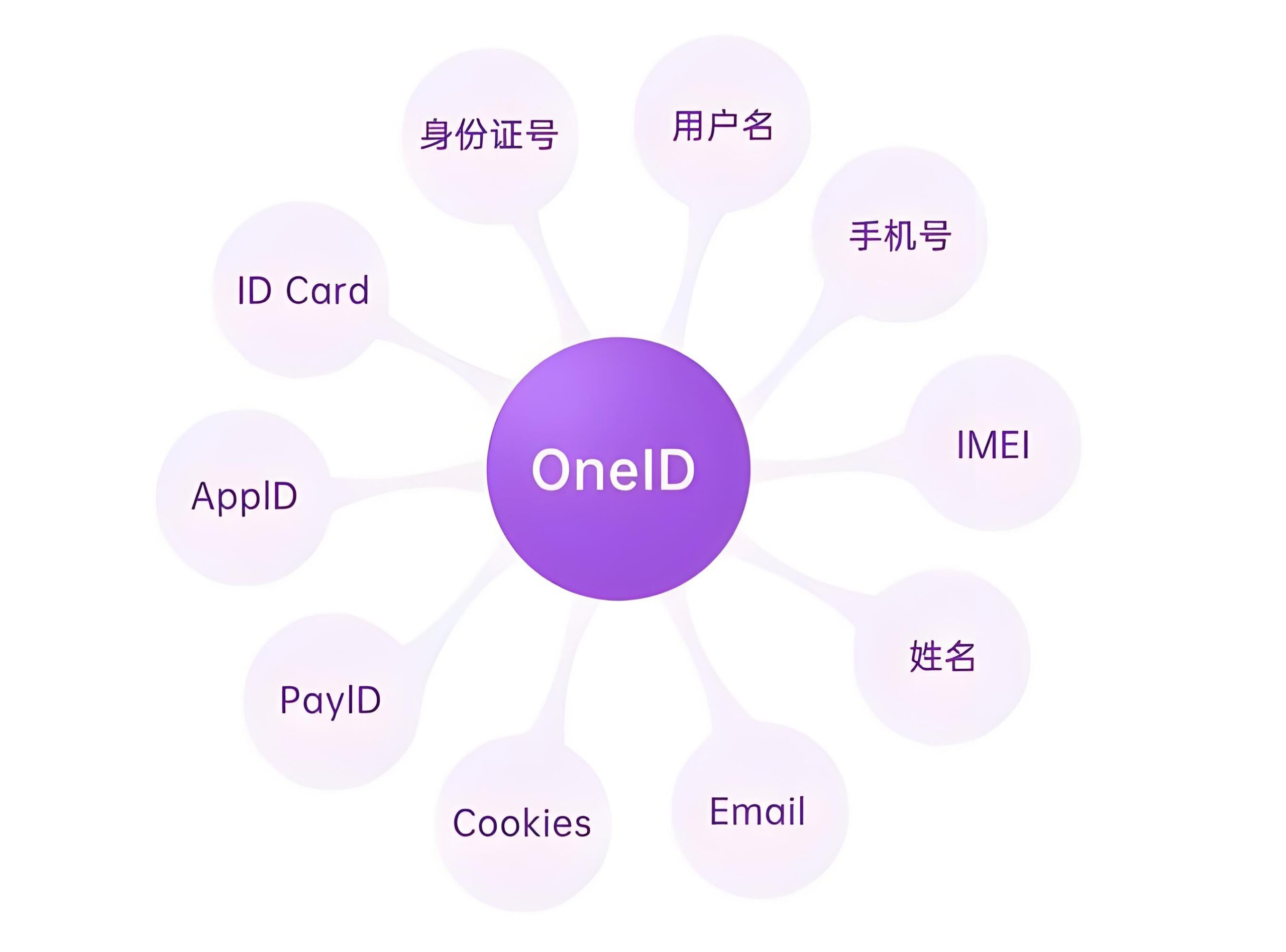
OneID turns devices, accounts and contact points into nodes and verified links into edges, then merges them with union-find. See the tables and privacy rules.
GEO (generative engine optimization) gets content selected, extracted, and cited in AI answers. Learn the definition, mechanics, and how it differs from SEO.
Five proven CTR optimization tactics: headline formulas, description copy, rich media, A/B testing and monitoring, to lift ad click-through rate by 30% or more.
WeCom