


Hybrid Search Architecture: Fusing BM25 and Vector Recall with RRF
Hybrid search fuses BM25 with vector retrieval through one ranking layer. Covers 3 mechanisms and 5 steps; Tengence Search adds multi-route fusion ranking.
Nov 22, 2026
Hybrid search fuses BM25 with vector retrieval through one ranking layer. Covers 3 mechanisms and 5 steps; Tengence Search adds multi-route fusion ranking.
Enterprise search cost spans licensing, infrastructure, integration and maintenance. This 3-year TCO table compares open-source, SaaS and custom-build options.

Multi-turn search is hard because the second turn rarely stands alone. This guide covers anaphora, drift, pollution, and the production fixes that make it work.

GraphRAG pairs a knowledge graph with summaries so LLMs answer local and global queries, covering 3 core features and 5 steps; Tengence GEO spans 10+ engines.
How should you layer enterprise search? This guide splits it into five layers and compares build, open-source, and managed routes, with a launch loop.

MCP standardises how a model calls external systems. This guide covers the three roles, four integration steps and the traps of enterprise search integration.

Agentic RAG hands retrieval to an autonomous agent that plans, rewrites queries and picks sources. This guide covers the definition and rollout checklist.
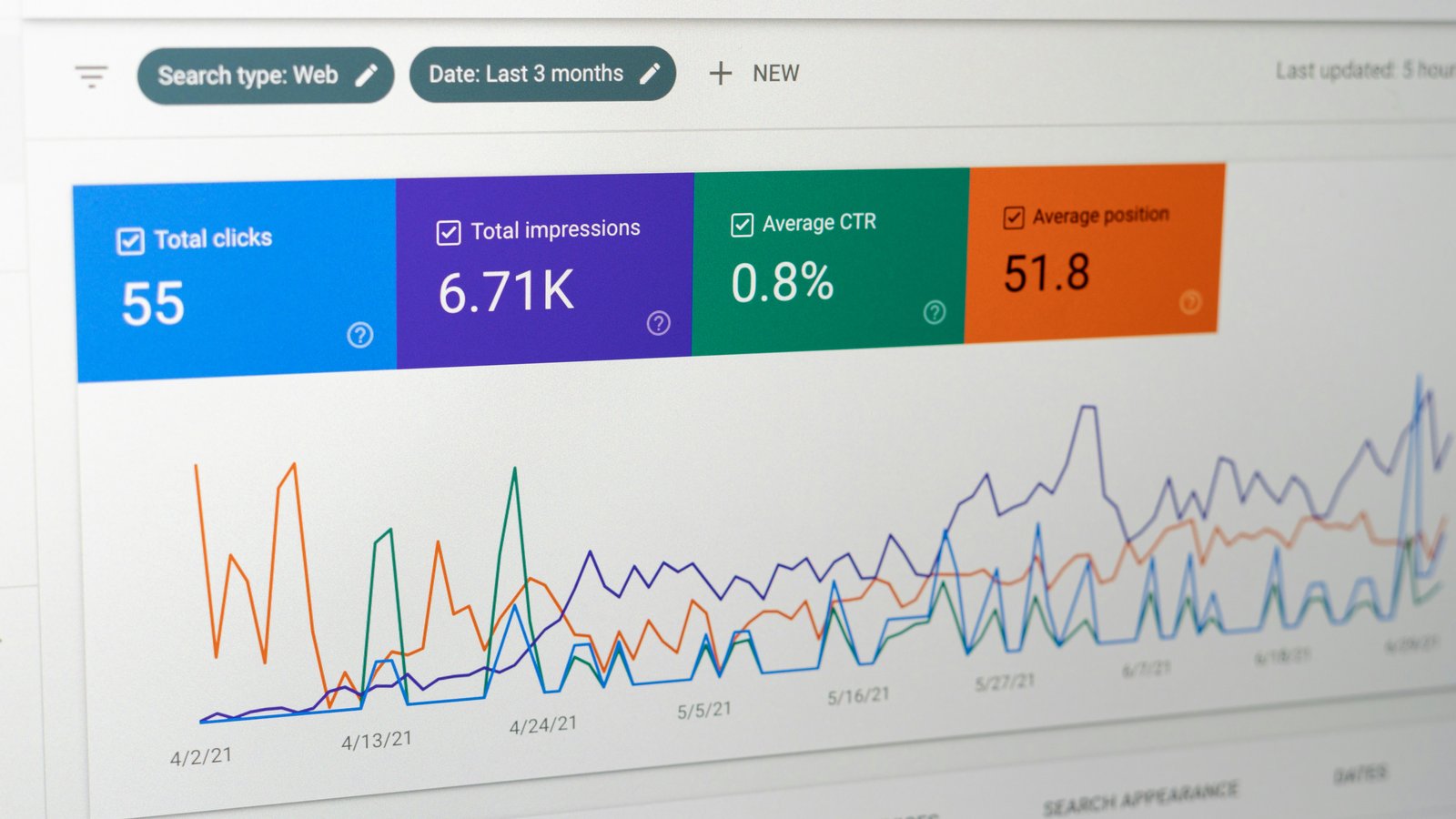
Perplexity uses PerplexityBot and the licensed Bing/Google indexes to find pages, citing answer-first, structured content. This guide gives an SEO checklist.

MCP is not a ranking factor, but it changes how AI agents reach enterprise data. Learn the real impact on GEO strategy and practical first steps for 2026 and beyond.

GEO cannot run on gut feel; dashboards quantify AI citations. This breaks down 3 categories and 5 KPIs, and Tengence GEO covers monitoring across 10+ engines.

Cross-border sites are shifting to ChatGPT and Perplexity citations. Covers GEO vs SEO, three cited scenarios, six steps to earn AI citations, three metrics.

Overseas sites must serve Google and AI engines like ChatGPT and Claude. Covers crawler classes, JS rendering gap, robots.txt tiers, AI-crawlability checklist.

RAG fixes what models cannot know: your private data, last week's policy update, internal knowledge. Retrieve first, then generate with sources, no retraining.

Choosing a vector database? Compare Milvus, Qdrant, Elasticsearch and pgvector on cost, hybrid search and migration effort, with a three-question decision tree.

Search is only data-driven if tracking is right: four must-collect events, timing, dedup, zero-result and rewrite tracking, and log-to-dashboard flows.

Enterprise search-recommendation is entering its fourth generation: rules, ML ranking, vectors, and LLM agents. We cover six trends and three moves to prepare.

Search-recommendation systems win on feedback, not models. We cover signal weights, bias correction, three update cadences, and a flywheel health check.

Can't find it? The right result often never entered the pool. Seven recall moves: understanding, synonyms, multi-path recall, vector fill-in, field coverage.

Search ranking dropped? Don't touch the ranker first. Rule out false drops, diagnose by metrics, find root cause via rollback, then recover in three phases.

Enterprise search turns scattered needs into one pipeline, one query service, one permission system. Covers architecture, hybrid retrieval, and reranking.

Search and CRO are one funnel: visibility decides volume, conversion decides value. This guide maps intent to page types and lists on-site search levers.

A search dashboard only matters when anomalies drive action. This guide organizes metrics into scale, quality, and value with a reference target per layer.

On-site search for SaaS and content platforms is hard, but three hard constraints: multitenant isolation, fine-grained permissions, and heterogeneous content.

Query intent recognition sets the ceiling on search relevance. Most queries are only 2–3 words, so the engine must reconstruct intent before recall and ranking.

Help center search must resolve issues before a ticket is filed, not just deflect it. Turn failed searches into a content backlog and measure true deflection.

Enterprise document search fails before the index: parsing, chunking, versioning and permissions that decide recall. A six-step, structure-first playbook.
Content search is not product search: learn how metadata, chapter and timestamp chunking, AI tagging and multimodal recall make articles and video findable.

Mobile search is shaped by screen, input cost and network. Compare in-app vs H5 retrieval and use our KPI baseline to tune entry, autocomplete and zero results.

How to do search query analysis: turn query logs into a zero-cost demand sample via termization, zero-result governance, rewrite attribution, and a closed loop.

Vector search in production: map queries and docs into a semantic space, replace brute-force with ANN, pick HNSW or IVF+PQ with hybrid retrieval plus reranking.

Site search UX optimization links autocomplete, correction, synonyms, faceted filters and zero-result recovery as one loop via latency and zero-result rate.
Search ROI is hard to measure: a three-layer usage-quality-revenue measurement, contribution vs incremental conversion, an ROI formula, and four misjudgments.

Enterprise knowledge base search fails when documents scatter and permissions differ. Rollout: ingestion, permission alignment, metadata, ranking, governance.

RAG evaluation fails when retrieval and generation scores merge. Use nDCG@10 and MRR for retrieval, faithfulness for generation, and A/B reports as a gate.

A/B test site search changes: split into recall, ranking, and result-page layers; search conversion rate primary, zero-result and first-click rates guardrails.

How to calculate search conversion rate: fix the numerator and denominator, read usage, zero-result rate and top-result CTR, then improve recall and ranking.

Build, open source Elasticsearch or SaaS? Score six dimensions: capability, staffing, license risk, scaling, compliance, three-year TCO, then pick by scale.
Cross-border search is not fixed by translating queries: tokenization, morphology and word order shift recall. Compare three architectures, analyzers, ranking.

Tengence Intelligent Search fixes four on-site search failures with query understanding, keyword and vector recall, fused ranking, rules and search analytics.

Build or buy search? In-house needs 6-8 people and 10-15 months to launch, plus 0.5-1.0 FTE. Compare Tengence Search SaaS on cost, timeline, and results.

Search relevance problems split into recall vs. ranking failures: offline replay, multi-path recall, two-stage ranking, Learning to Rank, and a 3-phase rollout.

Do not merge search and recommendation. Share the data and recall base, split ranking and strategy, then roll out in four phases with clear engineering metrics.

Semantic search matches meaning with vectors, keyword search matches wording. See how each works, where each fails, and why hybrid search is the default.

Cut site-search zero-results rate below 2% in eight weeks: rank queries by frequency, then close synonym, spelling, and index gaps with eight strategies.

Five steps to optimize e-commerce site search: set the baseline, fix the index, improve query understanding, rework results and filters, then close the loop.

Search serves active intent; recommendation pushes. Unify them and you beat 1+1 with three mechanisms, four rollout steps, and one metric that proves it.

Site search explained: how the four-stage pipeline works, the seven metrics that matter, and the intent, retrieval and operations capabilities behind it.

Vector vs keyword search isn't either/or. BM25 for exact terms; vectors for synonyms. Hybrid retrieval is the default—BEIR nDCG@10 +5–15% over either alone.

Unifying e-commerce search and recommendations: one data layer, shared algorithms, an 8-week rollout plan, and case results of +61% search conversion lift.

Learn the 5 keys to site search optimization, from speed and relevance to error correction, ranking, and mobile UX, with metrics from a Tengence case study.
