


E-commerce Site Search Optimization: 5 Steps That Work
Five steps to optimize e-commerce site search: set the baseline, fix the index, improve query understanding, rework results and filters, then close the loop.
Sep 13, 2026
Five steps to optimize e-commerce site search: set the baseline, fix the index, improve query understanding, rework results and filters, then close the loop.

Site search explained: how the four-stage pipeline works, the seven metrics that matter, and the intent, retrieval and operations capabilities behind it.

Reranker choice is two-stage: a bi-encoder retrieves top-100 and a cross-encoder reranks to NDCG@10 = 74.30. Compare accuracy, latency and business rules.

RAG hallucination is a pipeline problem: fix recall and chunking, enforce citation-bound answers and abstention, then regress faithfulness on a fixed eval set.

Vector vs keyword search isn't either/or. BM25 for exact terms; vectors for synonyms. Hybrid retrieval is the default—BEIR nDCG@10 +5–15% over either alone.

Choosing a knowledge-base QA system hinges on retrieval, not the model. Compare build vs buy on cost, capability and time to value, with a team framework.

Unifying e-commerce search and recommendations: one data layer, shared algorithms, an 8-week rollout plan, and case results of +61% search conversion lift.

Learn the 5 keys to site search optimization, from speed and relevance to error correction, ranking, and mobile UX, with metrics from a Tengence case study.
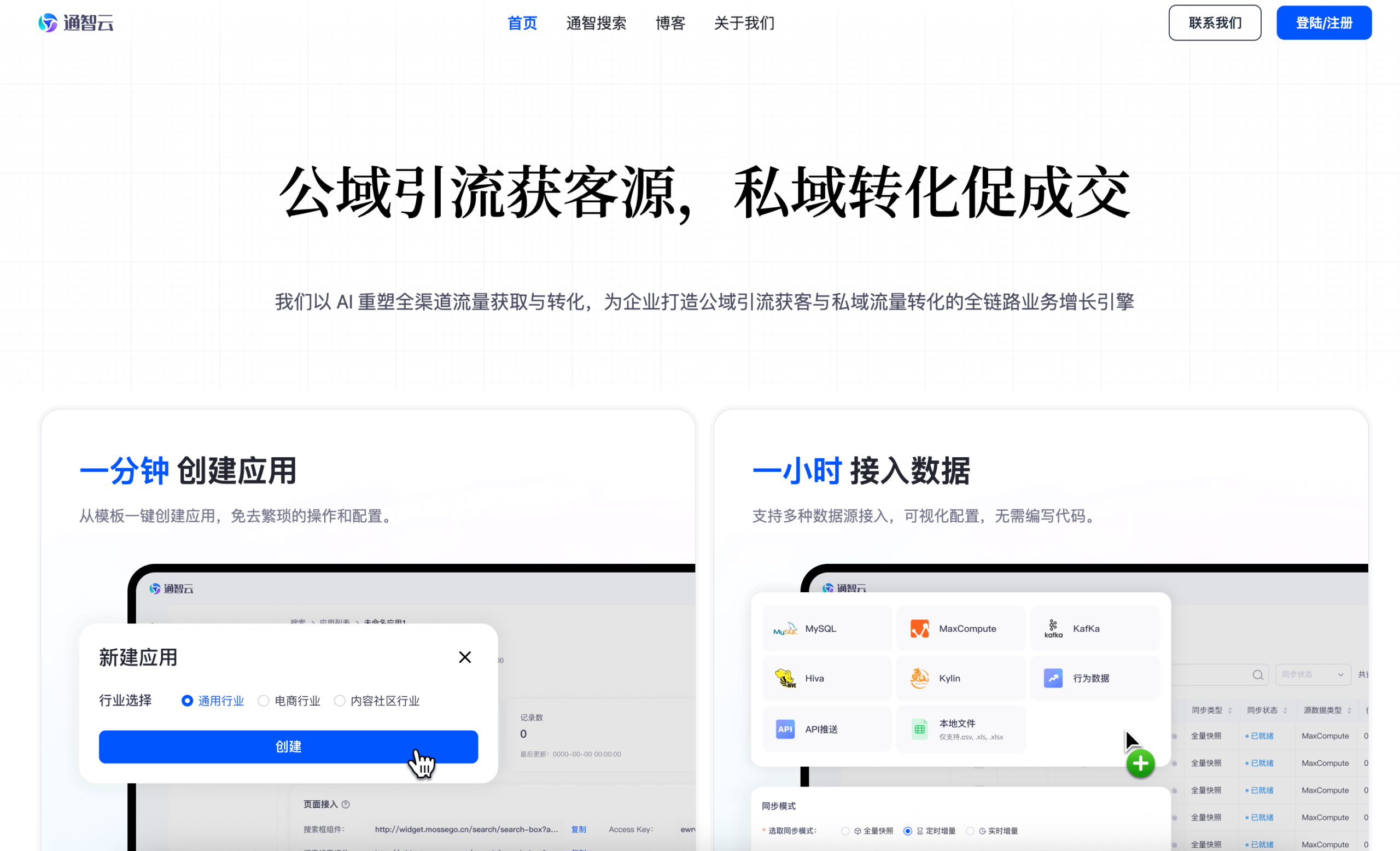
TENGENCE Cloud is an AI-driven growth engine. Its GEO+SEO dual engine builds visibility in search and AI answers; TENGENCE Search turns site search into revenue

Compare Algolia, Typesense, Meilisearch and self-hosted search on query understanding, ranking, cost and operations, with a framework by scale and team.
